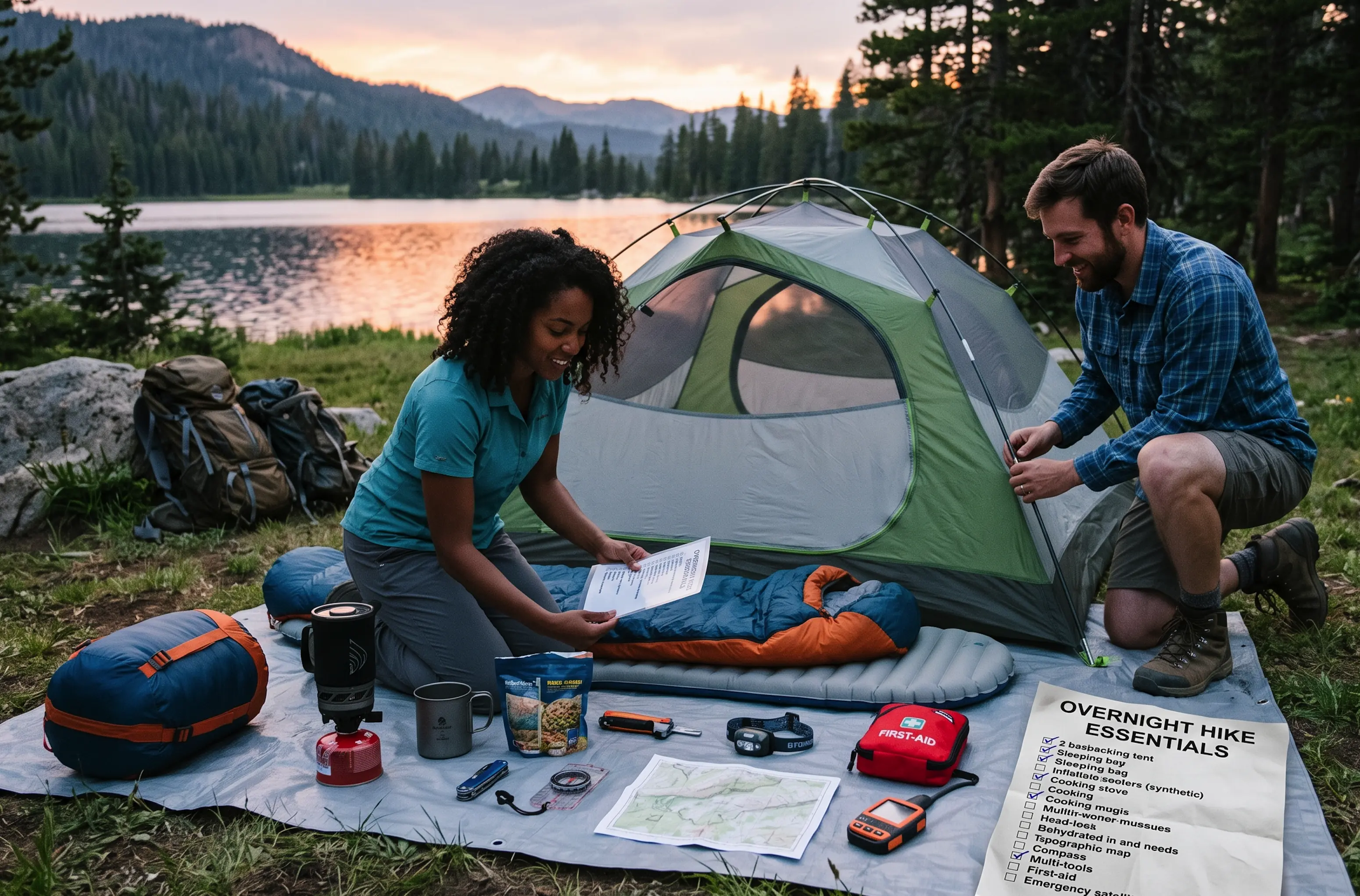
Transitioning from day hikes to overnight backpacking trips is an exciting milestone. However, it requires a significant shift in logistics. You are no longer just walking through nature; you have to survive and sleep in it. Forgetting a crucial piece of gear can lead to a miserable, cold night.
To help you prepare, we have compiled the definitive checklist for your first overnight hike, broken down by category.
1. The "Big Three" (Shelter, Sleep, Pack)
These items constitute the bulk of your weight and budget. Do your research before buying.
- Backpack: A 40L to 60L internal frame pack is ideal for a 1-to-2 night trip. Ensure it is properly fitted to your torso length.
- Shelter: A lightweight, double-wall, 3-season tent with a rainfly. Don't forget the stakes and footprint.
- Sleep System: A sleeping bag rated for 10 degrees colder than the lowest expected temperature, paired with an insulated sleeping pad (look for an R-value of 2.5 or higher). Never sleep directly on the ground; it will sap your body heat instantly.
2. Hydration and Nutrition
You burn significantly more calories backpacking than you do in daily life. Plan your meals carefully.
- Water Filter: A squeeze filter (like the Sawyer Squeeze) or chemical purification tablets.
- Water Storage: Aim for capacity to carry 2-3 liters at a time (bottles or hydration bladders).
- Stove System: A small canister stove, fuel, a lightweight pot, and a spork.
- Food: Dehydrated meals for dinner, dense caloric snacks for the trail (nuts, jerky, protein bars), and instant coffee.
Safety Rule: Always store your food in a bear canister or hang it in a bear bag at least 200 feet away from your sleeping area to keep wildlife out of your camp.
3. The 10 Essentials (Survival & Safety)
Never leave the trailhead without these items, regardless of how short the trip is.
- Navigation: Physical topographic map and compass (and the knowledge of how to use them).
- Headlamp: Plus extra batteries.
- Sun Protection: Sunglasses, sunscreen, and a hat.
- First Aid Kit: Including blister treatments, bandages, and basic medications.
- Knife/Multi-tool: For gear repair and food prep.
- Fire Starter: Waterproof matches or a lighter.
- Shelter: (Covered in the Big Three).
- Extra Food: One day's worth of emergency rations.
- Extra Water: (Covered in Hydration).
- Extra Clothes: A warm insulating layer and a waterproof rain jacket.
By methodically checking off this list, you can step onto the trail with the confidence that you are prepared for whatever the wilderness throws your way. Happy hiking!